American boxing legend Floyd Mayweather Jr. has unveiled plans to establish boxing academies and grassroots development programmes across Nigeria, raising hopes of new opportunities for young fighters seeking to build professional careers.
The proposed initiative, tagged TMT Frontrow Fight Series Nigeria, is designed to identify, train and promote emerging Nigerian boxing talents while creating pathways for them to compete at national and international levels.
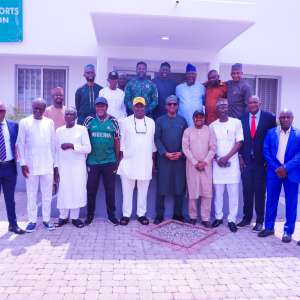
Mayweather announced the plans during his Nigerian visit, which included a meeting with Lagos State Governor Babajide Sanwo-Olu at Lagos House, Marina, on Sunday, November 15.
The proposed academies are expected to operate in Lagos, Abuja, Enugu, Calabar and other locations, extending structured boxing development opportunities beyond established sporting centres.
The inaugural TMT Frontrow Fight Series event is scheduled for 2027, with Mayweather also expected to feature in a boxing event in Nigeria during the same year. However, organisers are yet to announce the venue and details of his proposed contest.
MAYWEATHER SEEKS TO DEVELOP AFRICAN BOXING TALENT
The former five-division world champion has expressed his interest in supporting young African athletes and providing opportunities for emerging fighters to showcase their abilities.
Mayweather, who retired from professional boxing in 2017 with an unbeaten record of 50 victories, including 27 knockouts, believes Africa possesses enormous sporting potential.
Speaking during his Nigerian visit, the boxing icon emphasised the importance of identifying young talents and creating opportunities for them to develop their abilities.
The initiative is being developed through TMT Africa and Frontrow Fight Series, with the proposed programme expected to combine boxing academies, organised competitions, technical support and international exposure.
According to Vanguard, the programme is also expected to provide equipment and technical expertise while exploring partnerships that could connect Nigerian boxing facilities with established international training centres, including Mayweather’s gym in Las Vegas.
SANWO-OLU EXPRESSES LAGOS’ READINESS TO PARTNER
Mayweather’s visit also brought the proposed initiative into discussions with the Lagos State Government.
The boxer met with Governor Babajide Sanwo-Olu, who expressed the state’s readiness to explore collaboration aimed at developing grassroots boxing and attracting international sporting events.
The governor described the initiative as an opportunity to inspire young Nigerian athletes while strengthening Lagos’ position as a destination for international sports and entertainment.
Mayweather had earlier met with Lekan Fatodu, Director-General of the Lagos State Sports Commission, to discuss potential collaboration.
The engagement signals interest from the Lagos State Government, although the detailed terms, funding arrangements and operational responsibilities of any proposed partnership have yet to be publicly established.
WHAT THE ACADEMIES COULD MEAN FOR GRASSROOTS ATHLETES
For Nigerian boxing, the proposed academies could address some of the challenges facing young fighters, particularly access to quality coaching, modern training equipment, regular competitions and international development opportunities.
Across many communities, talented young athletes struggle to progress because of inadequate facilities, limited financial support and the absence of structured pathways into professional boxing.
A properly managed academy system could help identify promising fighters at an early age and provide them with the technical foundation required to compete at higher levels.
The proposed expansion into Lagos, Abuja, Enugu and Calabar is particularly significant because it could extend opportunities beyond traditional boxing centres.
Young athletes from schools, community clubs and local boxing programmes could benefit from talent identification exercises and organised competitions.
However, the success of the initiative will depend on whether these opportunities are made accessible to talented athletes irrespective of their financial circumstances or geographical location.
NIGERIA MUST BUILD A DEVELOPMENT SYSTEM, NOT JUST HOST BOXING EVENTS
While the prospect of hosting an international boxing event featuring Mayweather is likely to attract attention, the greater opportunity lies in creating a sustainable development structure for Nigerian boxing.
Nigeria has a history of producing talented amateur and professional boxers, but many promising fighters face challenges when transitioning from grassroots competition to elite and professional levels.
The experience of heavyweight boxer Efe Ajagba, who pursued important stages of his professional development abroad, illustrates the importance of providing local athletes with access to quality facilities and international opportunities.
The proposed Mayweather academies could help address this gap if they deliver consistent training programmes, qualified coaching personnel, medical support and regular competitive opportunities.
The Nigerian Boxing Board of Control, the Nigeria Boxing Federation, state sports commissions and private-sector partners will also have important roles to play in ensuring that the initiative complements existing boxing development structures.
FIVE PRIORITIES THAT WILL DETERMINE THE PROJECT’S SUCCESS
For the proposed academies to create a lasting impact, several areas will require attention.
1. Accessible grassroots talent identification
Talent identification should extend to public schools, underserved communities and local boxing clubs. Opportunities should not be restricted to athletes who can afford private training.
2. Qualified coaching and modern facilities
The academies will require trained coaches, appropriate equipment, safe training environments and structured development programmes.
3. Regular competitions
Young boxers need consistent opportunities to compete. Inter-academy tournaments, state championships and national competitions could provide a clear progression pathway.
4. International exposure
Partnerships with established boxing facilities and international competitions could help promising Nigerian fighters gain experience beyond domestic events.
5. Transparent funding and athlete welfare
The organisers and their Nigerian partners will need to clarify how the academies will be financed, managed and monitored. Medical supervision, athlete safeguarding, education and career development must remain central to the programme.
THE BIGGER QUESTION: WILL THE PROMISE BECOME A LASTING LEGACY?
Mayweather’s proposed boxing academies present an interesting opportunity for Nigerian sports development, particularly at a time when the country is seeking stronger private-sector participation in grassroots sports.
However, the real test will not be the excitement surrounding the boxing legend’s visit or the attraction of an international fight in Nigeria.
It will be measured by the number of young athletes who gain access to quality training, the opportunities created for emerging boxers and the number of Nigerian fighters who eventually progress to international competition.
For Nigeria, the opportunity extends beyond boxing. A successful model could demonstrate how international sports personalities, private investors and government institutions can collaborate to develop grassroots sporting talent.
Mayweather has brought the proposal to Nigeria. The responsibility now lies with the organisers and local stakeholders to turn the ambition into functioning academies, competitive opportunities and a sustainable pathway for the next generation of Nigerian boxers.
SMoR SPORTS – Developing the next generation. Reporting the stories that matter.