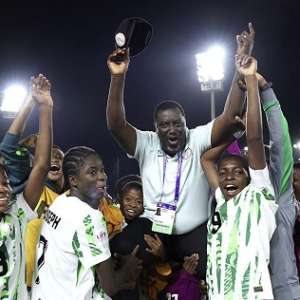
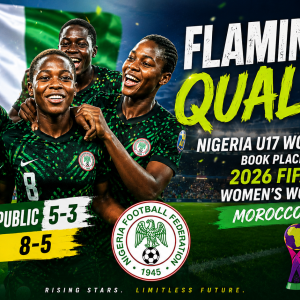
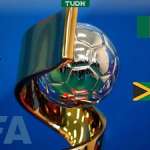
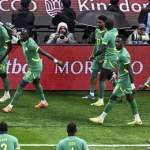
Nigeria’s Flamingos have written a glorious new chapter in football history, defeating Japan 2–1 to win the 2026 FIFA U-17 Women’s World Cup in Morocco and become the first African women’s national team to win a FIFA world title at any level.
The Nigerian youngsters completed their remarkable campaign on Saturday, November 7, at the Mohammed VI Football Complex in Rabat, Morocco, delivering a victory that will be remembered as one of the greatest achievements in Nigerian women’s football.
Beyond lifting their first-ever U-17 Women’s World Cup trophy, the Flamingos also produced the tournament’s Most Valuable Player, with forward Oluebube Umejiaku receiving the prestigious Golden Ball award.
Bashiru and Umejiaku deliver historic victory
Nigeria started the final with confidence and attacking ambition against a technically strong Japanese side.
The breakthrough arrived in the 39th minute when Awawu Bashiru scored to give Nigeria a deserved 1–0 lead.
The Flamingos returned from the interval with renewed determination, and Umejiaku doubled the advantage in the 47th minute with an excellent finish after getting onto Esther Stephen’s forward pass.
Japan refused to surrender and reduced the deficit in the 80th minute through Fuki Ito, setting up a tense closing period.
However, Nigeria defended resolutely under late pressure to preserve their 2–1 advantage and secure the historic championship.
Umejiaku was also named Player of the Match for her outstanding performance in the final.
Umejiaku wins Golden Ball as Nigeria celebrates individual excellence
The celebrations extended beyond the team trophy, as Oluebube Umejiaku was recognised as the best player of the entire tournament.
The Nigerian forward finished the competition with four goals and two assists, earning the adidas Golden Ball.
Her performance against Japan, particularly her decisive second-half goal, underlined her importance to the Flamingos’ championship campaign.
Other major individual awards included:
- Golden Ball: Oluebube Umejiaku (Nigeria)
- Silver Ball: Yu Jong-hyang (DPR Korea)
- Bronze Ball: Fuki Ito (Japan)
- Golden Boot: Maddie DiMaria (USA) – 12 goals
- Silver Boot: Yu Jong-hyang (DPR Korea)
- Bronze Boot: Ri Ui-gyong (DPR Korea)
- Golden Glove: Kim Son-gyong (DPR Korea)
- Fair Play Trophy: Japan
The Golden Ball award further confirmed Nigeria’s growing influence in women’s youth football.
From opening defeat to world champions
The Flamingos’ journey to the summit of world football was not without difficulties.
Nigeria began the tournament with a disappointing 2–1 defeat to Poland, raising early questions about the team’s prospects.
However, the youngsters responded impressively, winning their subsequent six matches to complete an extraordinary turnaround.
Their journey included victories over Puerto Rico and defending champions Korea DPR in the group stage.
They subsequently defeated Mexico in the Round of 16, Venezuela in the quarter-finals and Brazil in the semi-finals.
The 3–1 victory over Brazil secured Nigeria’s first-ever appearance in the final.
Defeating Japan completed the remarkable journey and delivered Nigeria’s maiden world title at this level.
FIFA President Infantino congratulates Nigeria
FIFA President Gianni Infantino congratulated Nigeria following the historic victory, describing the achievement as well deserved.
He highlighted the significance of Nigeria becoming the first African women’s team to win a FIFA world title at any level.
Infantino also congratulated Japan for finishing runners-up and DPR Korea for claiming the bronze medal.
The final itself was historic, marking the first time an African national team faced an Asian national team in a FIFA tournament final.
National Sports Commission hails historic achievement
Nigeria’s National Sports Commission (NSC) also celebrated the Flamingos’ triumph.
NSC Chairman Shehu Dikko described the victory as evidence of the importance of grassroots sports development and investment in young athletes.
He emphasised that building a strong foundation through improved development structures and opportunities for young talents would deliver further success for Nigerian sports.
Director-General Bukola Olopade also congratulated the players and technical crew, describing the achievement as a victory for all Nigerians.
The Federal Government delegation at the final was led by Shehu Dikko and included senior sports and government officials.
A defining moment for Nigerian and African women’s football
Nigeria’s triumph represents much more than winning another international competition.
It demonstrates the potential of young Nigerian female footballers and the importance of sustained investment in grassroots development, school sports, youth competitions and professional pathways.
The Flamingos had previously secured third place at the 2022 FIFA U-17 Women’s World Cup in India. Their 2026 achievement takes Nigerian youth women’s football to an entirely new level.
The challenge now is to ensure that these champions receive the necessary support, development opportunities and professional exposure to progress into the senior national team and international football.
Nigeria has produced world champions. The next responsibility is to build a system capable of producing many more.
CONCLUSION: THE FLAMINGOS HAVE MADE NIGERIA PROUD
From an opening-day defeat to lifting the world trophy, Nigeria’s Flamingos have demonstrated resilience, courage, teamwork and an extraordinary desire to succeed.
Their historic 2–1 victory over Japan will inspire a new generation of girls across Nigeria and Africa to believe that they can compete and win at the highest level.
Nigeria are world champions. Africa has its first FIFA U-17 Women’s World Cup champions. And the Flamingos have secured their place in history.
Congratulations, Flamingos! Congratulations, Nigeria!
🇳🇬 THE WORLD BELONGS TO THE FLAMINGOS!
SMoR Sports – Promoting Nigerian Sports, Celebrating African Excellence.